

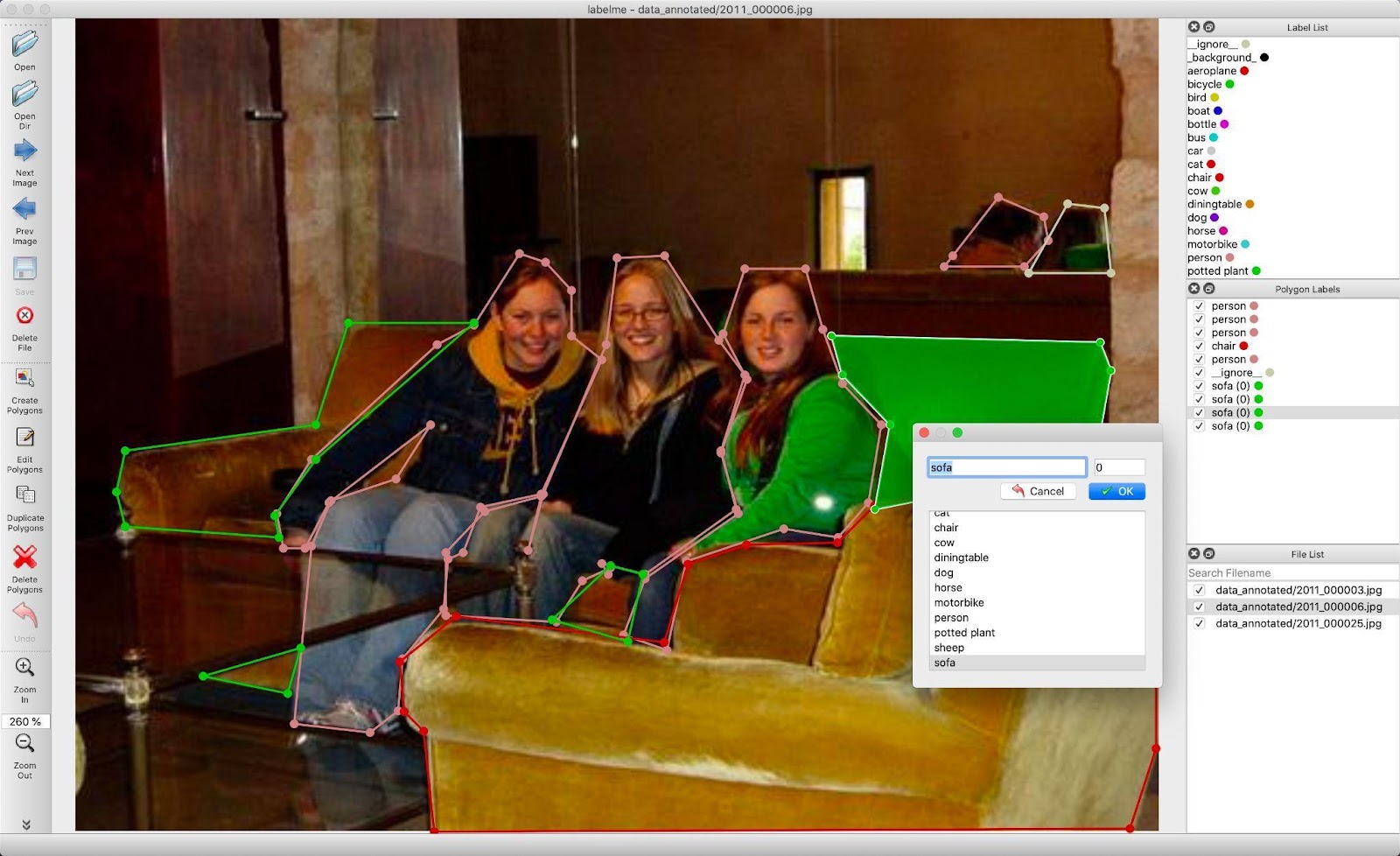
Image annotation tools are essential in machine learning and computer vision projects because they help create accurate datasets for AI model training. Among the most popular annotation tools are labelimg and LabelMe. Both tools are widely used by developers, data scientists, and AI researchers, but they serve different purposes and offer different annotation features. Understanding the difference between LabelImg and LabelMe can help users select the best tool for their specific computer vision workflow and dataset requirements.
Understanding LabelImg and LabelMe
What Is LabelImg?
LabelImg is an open-source image annotation tool mainly designed for object detection projects. It allows users to draw rectangular bounding boxes around objects in images and save annotations in formats compatible with machine learning frameworks such as YOLO and Pascal VOC.
What Is LabelMe?
LabelMe is an advanced image annotation tool that supports multiple annotation styles, including polygons, lines, and points. It is commonly used for image segmentation and detailed object labeling tasks where more precise annotations are required.
Purpose of Image Annotation Tools
Both LabelImg and LabelMe help prepare datasets for artificial intelligence training. Proper image annotation improves the accuracy and efficiency of computer vision models by teaching them how to recognize and identify objects correctly.
Key Differences Between LabelImg and LabelMe
Annotation Types Supported
The main difference between LabelImg and LabelMe is the annotation style. LabelImg focuses on simple bounding box annotations, while LabelMe supports polygon-based annotations that allow more detailed object outlines.
Supported Output Formats
LabelImg commonly exports annotations in XML and TXT formats used by object detection frameworks. LabelMe primarily uses JSON files, which are useful for segmentation and advanced machine learning tasks.
User Interface and Workflow
LabelImg has a simple and lightweight interface that is easier for beginners to use. LabelMe offers more advanced annotation tools and flexibility, but its interface may require more experience for efficient use.
Choosing the Best Tool for Your Project
When to Use LabelImg
LabelImg is the best choice for object detection projects where rectangular bounding boxes are enough. It works efficiently for fast image labeling and is widely used in YOLO-based AI training datasets.
When to Use LabelMe
LabelMe is more suitable for semantic segmentation and projects that require detailed object boundaries. Its advanced annotation options make it ideal for complex computer vision tasks.
Performance and Efficiency Considerations
The right tool depends on project complexity and annotation requirements. labelimg provides faster annotation for simple tasks, while LabelMe offers greater precision for high-detail datasets and segmentation projects.
Advantages and Limitations of Both Tools
Advantages of LabelImg
LabelImg is lightweight, beginner-friendly, and easy to install. It supports popular object detection formats and provides a fast workflow for creating AI training datasets.
Advantages of LabelMe
LabelMe offers flexible annotation capabilities and supports complex shapes and object outlines. This makes it highly useful for segmentation and advanced image labeling applications.
Limitations of LabelImg and LabelMe
Both tools require manual annotation, which can become time-consuming for large datasets. Users may also need additional tools to convert annotation formats for specific machine learning frameworks.
FAQs
What is LabelImg used for?
LabelImg is mainly used for object detection image annotation using bounding boxes.
Is LabelMe better for segmentation tasks?
Yes, LabelMe is more suitable for image segmentation and polygon-based annotations.
Are LabelImg and LabelMe free tools?
Yes, both LabelImg and LabelMe are open-source and free to use.
Which annotation tool is easier for beginners?
LabelImg is generally easier for beginners because of its simpler interface.
Can LabelImg and LabelMe be used for AI training?
Yes, both tools are commonly used to create datasets for machine learning and computer vision models.
Conclusion
LabelImg and LabelMe are both powerful image annotation tools used in artificial intelligence and computer vision projects. LabelImg is ideal for simple object detection tasks, while LabelMe provides advanced annotation features for segmentation and detailed labeling. Choosing the right tool depends on the type of dataset, annotation complexity, and overall project requirements.
